
Demilec Attic Insulation in Spring Valley: A Homeowner’s Guide
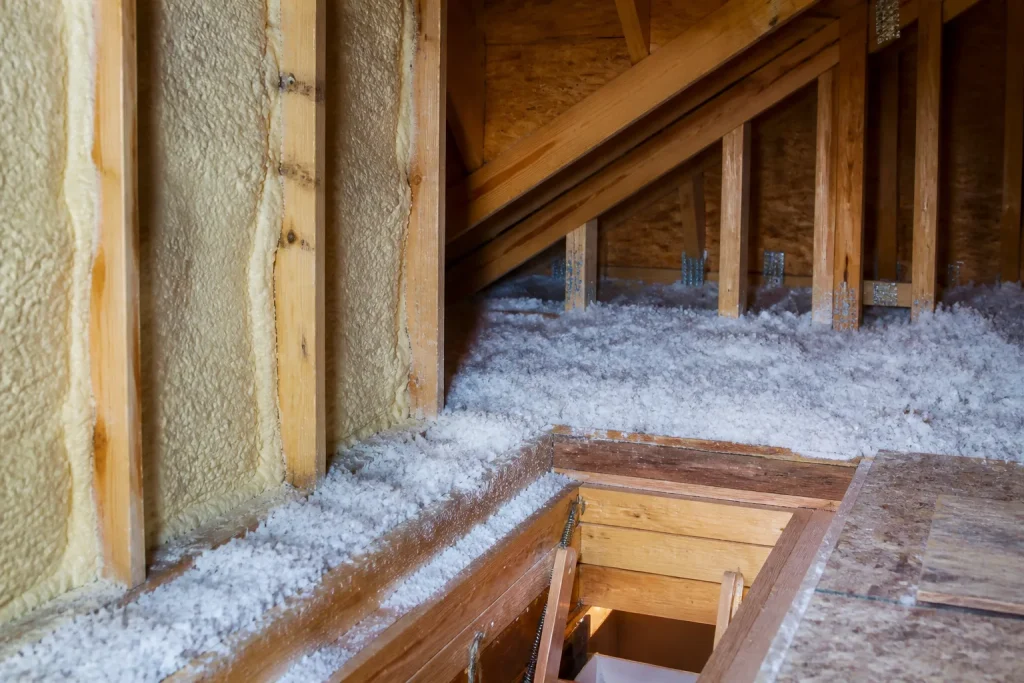
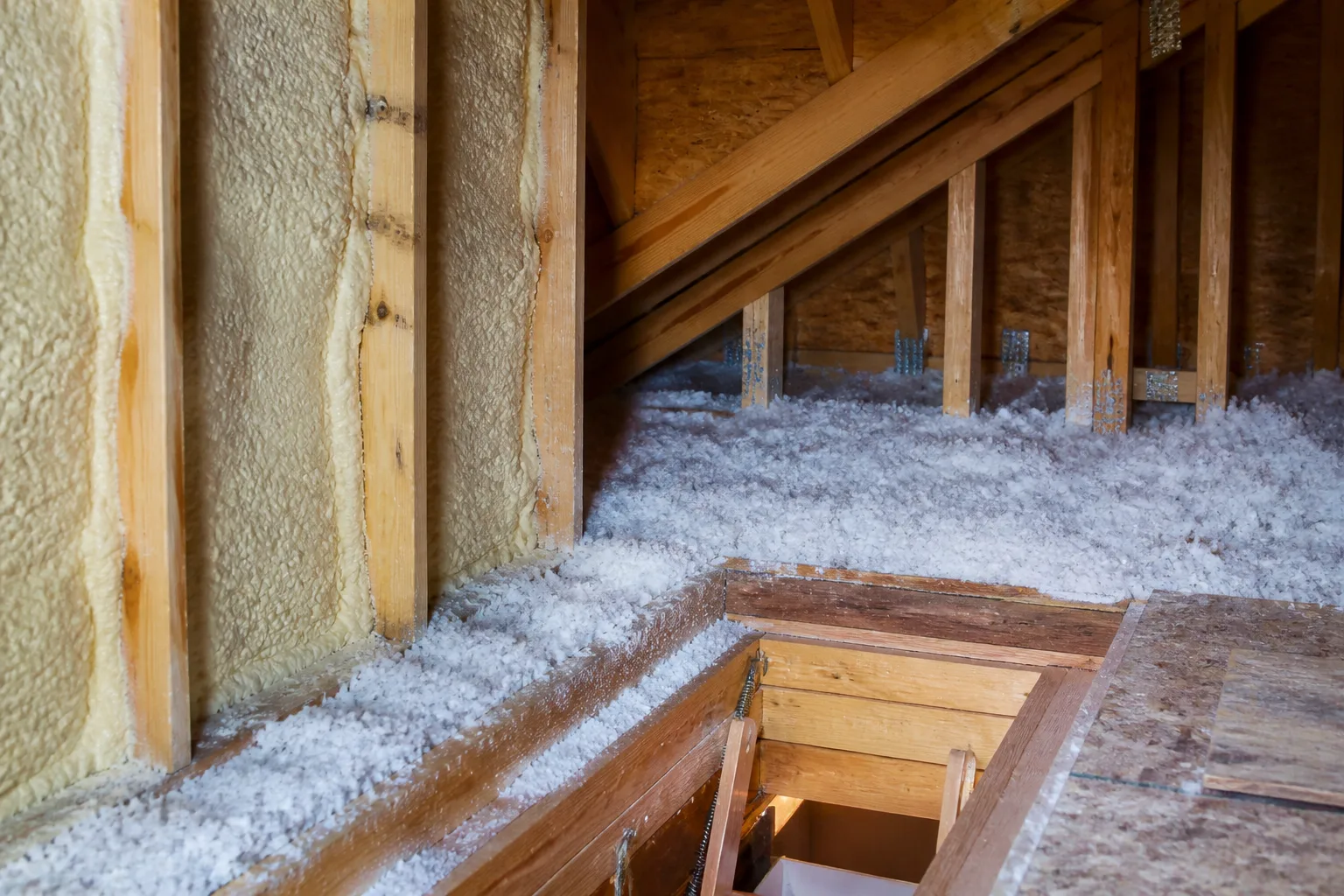
Most attic insulation fails for a reason homeowners rarely hear: it isn’t the R-value, it’s the air. Batts and blown-in fiberglass sit around gaps at the top plates, can lights, and plumbing penetrations while hot desert air pours straight through. Demilec spray foam seals those gaps as it insulates, which is why we reach for it on the tough Spring Valley attics and skip it on the easy ones. This guide explains where the premium pays off and where it doesn’t.
If you’d rather have someone look before you spend, call (844) 320-7741. Estimates are free, and a live person answers around the clock.
What makes Demilec different from generic spray foam?
Demilec is a brand of spray foam with a specific line of products, and its two flagship attic formulations, Heatlok Soy and Heatlok HFO, are built for exactly the conditions Spring Valley attics throw at them. Summer attic temperatures here regularly climb past 150°F, and cheap foam can sag, off-gas, or lose dimensional stability in that heat. Demilec’s chemistry holds its shape and its seal at those temperatures, which matters when your attic sits under a dark tile roof baking from May through September.
The other difference is the blowing agent. Heatlok HFO uses a next-generation blowing agent with a much lower global warming potential than older foams, and Heatlok Soy blends renewable, soy-based polyol content into the formula. Neither change weakens the finished product. They just make it a better fit for homeowners who care about what’s sprayed into their house.
In our experience across Spring Valley, the practical payoff is a foam that stays bonded to the roof deck or the ceiling plane through year after year of 110°F swings. That bond is the whole point. A spray foam that delaminates stops being an air barrier overnight.
The air-sealing math: why a 1% gap can cost you half your cooling bill
Here’s the number that surprises most homeowners. In a typical Spring Valley attic, gaps, cracks and penetrations that add up to roughly 1% of the total attic surface can account for around half of a home’s energy loss. One percent. That’s the footprint of a couple of open can lights and a bath fan vented into the attic instead of outside.
Fiberglass batts can’t fix this because they filter air rather than block it. Air blows through the fibers, carrying heat with it. Blown-in insulation is better at filling voids but still relies on gravity and pile depth, not a seal. Demilec closed-cell foam expands into every gap it touches and cures into a continuous membrane, so it addresses the leak itself, not just the temperature difference across the ceiling.
What that means for a Spring Valley home:
- Ductwork in a 150°F attic loses cooling before it ever reaches a register. Sealing the attic envelope reduces that loss directly.
- Hot attic air pulled into the return plenum raises supply temps and makes the AC run longer for the same comfort.
- In our climate, the attic often runs 40 to 50 degrees hotter than the living space, so every unsealed penetration is a small, constant heat source.
The R-value still matters, but it comes second. Seal first, then insulate to depth. That order is the difference between a comfortable house and a well-labeled but leaky one.
Closed-cell vs. open-cell Demilec: which fits your Spring Valley attic
Demilec offers both closed-cell and open-cell options, and picking the right one comes down to your roof deck and what you’re trying to accomplish. Closed-cell is denser, higher R-value per inch, and acts as a vapor retarder and a bit of structural stiffening. Open-cell is lighter, cheaper per square foot, and better at sound dampening.
Deck type drives the decision more than anything:
- Wood sheathing and rafters: Closed-cell Demilec applied to the underside of the roof deck creates an unvented, conditioned attic. This is our go-to for Spring Valley homes where ductwork lives in the attic, because the ducts end up inside the thermal envelope instead of outside it.
- Concrete tile roofs: The deck underneath is usually wood, but the tile adds radiant heat load from above. Closed-cell reads best here because it handles high deck temperatures without degrading.
- Foam panel or rigid board decks: Open-cell can be a reasonable fit when the panels are already in place and you’re topping up a ceiling plane rather than conditioning the whole attic. We check adhesion carefully, since foam doesn’t bond the same way to every panel surface.
Roof ventilation is the other factor. In Spring Valley, we look at ridge and soffit venting before recommending an unvented assembly. If venting is working well and the ducts are sealed, ceiling-plane insulation can be enough. If the ducts are in the attic and venting is marginal, going to the deck usually wins.
What does Demilec attic insulation cost in Spring Valley?
Spring Valley pricing runs higher than national averages because attic temperatures and code requirements here push toward closed-cell in more situations, and because the product itself carries a premium over fiberglass. Expect to pay more for a manufacturer-certified Demilec applicator, and expect that price to buy you a seal, not just a fill. Here’s what we typically see for a single-family Spring Valley attic:
| Scope | Typical range (installed) |
|---|---|
| Open-cell Demilec, ceiling plane, per sq. ft. | $1.50 – $2.75 |
| Closed-cell Demilec, ceiling plane, per sq. ft. | $2.75 – $4.50 |
| Closed-cell Demilec, roof deck (unvented attic) | $4.00 – $6.50 |
| Air sealing plus modest top-up (small attic) | $900 – $1,800 |
| Full closed-cell attic, 1,200 – 1,800 sq. ft. home | $4,500 – $9,000 |
Those ranges move with attic square footage, existing insulation that has to come out first, accessibility (low-slope roofs and tight HVAC platforms add labor hours), and how many penetrations need attention. We give upfront pricing before work starts, and most jobs are finished in a single visit.
Two standing offers help soften the cost: $50 off any repair over $250, and a permanent 5% Senior & Veteran discount. If you want a real number for your house rather than a range, call (844) 320-7741 and we’ll come out and measure.
How do you verify you’re getting a certified Demilec applicator?
Demilec foam isn’t a product any installer can pull off a shelf and spray correctly. Demilec trains and certifies applicators on its specific formulations, and the certification covers mixing ratios, spray temperatures, and pass thickness. Getting this wrong shows up as off-ratio foam that stays tacky, cures brittle, or bonds poorly. That’s a defect you won’t see until the attic performance is already wrong.
Before you hire anyone in Spring Valley, ask these questions:
- Are you a Demilec-certified applicator, and can you show the current certificate?
- Will you provide the product data sheet for the exact formulation you’re spraying?
- How do you control substrate temperature and moisture before spraying?
- What’s your warranty, and does it cover the installed assembly, not just the foam?
Spray foam is one of the genuinely dangerous parts of insulation work, so it belongs in trained hands. Isocyanates require proper respiratory protection and ventilation, and misapplied foam in a hot attic can be a real safety and performance problem. We don’t recommend shoulder-checking this one; it’s a professional job from start to finish.
Ask for whatever written commitment a contractor offers. Ours is the 90-Day Done Right Promise: if the work isn’t right, we make it right. That’s a written commitment, not a verbal one.
When to call a pro
If you’re comfortable walking your attic and spot obvious gaps, or you’ve already had a home energy audit flag air leakage, that’s useful context. But diagnosis is where most homeowners get stuck. You can’t easily tell whether sealing the ceiling plane or going unvented to the deck is the right call without looking at roof venting, duct runs, and deck condition together. That’s a job for someone who’s seen a lot of Spring Valley attics.
Call us when your cooling bill climbs every July, when the upstairs rooms run hotter than downstairs, or when you’re planning a remodel and need the attic envelope settled once. Our technicians have up to 15 years of experience and are background-checked and uniformed on every visit.
Related services in Spring Valley: if your attic has attic staircase gaps or rodent entry points, pair Demilec with our attic air sealing and rodent proofing work. If crawl space moisture is feeding the same comfort problem, our crawl space encapsulation and vapor barrier service handles the floor side.
The Bottom Line
Demilec closed-cell spray foam is a different category of product than the batts and blown-in insulation most Spring Valley homeowners have heard about. It seals, insulates, and stiffens in one application, and its heat-resistant chemistry is built for attics that hit 150°F. Open-cell Demilec covers the cases where a ceiling-plane fill is enough. Either way, seal the air first, then insulate to depth, and verify your applicator is manufacturer-certified before anyone sprays.
If you’re in Spring Valley and need help sorting this out, Warmline Insulation Spring Valley offers free estimates and most jobs are finished in a single visit. Calls are answered by a live person 24/7. Reach us at (844) 320-7741.
Frequently Asked Questions
Is Demilec spray foam worth the extra cost over blown-in insulation in Spring Valley?
It’s worth it when air leakage is the real problem, which is common in Spring Valley attics with ducts inside them. Blown-in is a good fit when your ceiling plane is already tight. The way to know which you have is a home energy audit, and that’s where we usually start. Call (844) 320-7741 for a free estimate.
Can Demilec foam be sprayed over my existing attic insulation?
Sometimes, but not always. Foam needs to bond to a clean substrate, and older fiberglass or cellulose in bad shape often has to be removed first. We check the condition of the existing insulation and the deck before recommending one path. Call (844) 320-7741 and we’ll tell you straight.
How long does Demilec attic insulation last?
Closed-cell Demilec, properly applied to a sound deck, is designed to last the life of the building. The weak link is usually application quality, not the product. That’s why the manufacturer certification and the installer’s warranty both matter. Call (844) 320-7741 if you want to know what’s in your attic now.
Will spray foam make my Spring Valley attic too hot for the HVAC equipment up there?
No, and it’s often the opposite. When duct runs and equipment sit inside a sealed, conditioned attic instead of a 150°F oven, the equipment works less and lasts longer. We evaluate duct sealing and equipment clearance before recommending an unvented assembly. Call (844) 320-7741 to have your specific attic looked at.
Written by the team at Warmline Insulation Spring Valley.
Need Insulation Help?
Call Warmline Insulation Spring Valley - licensed & insured, here with fast after-hours help in Spring Valley.
(844) 320-7741