
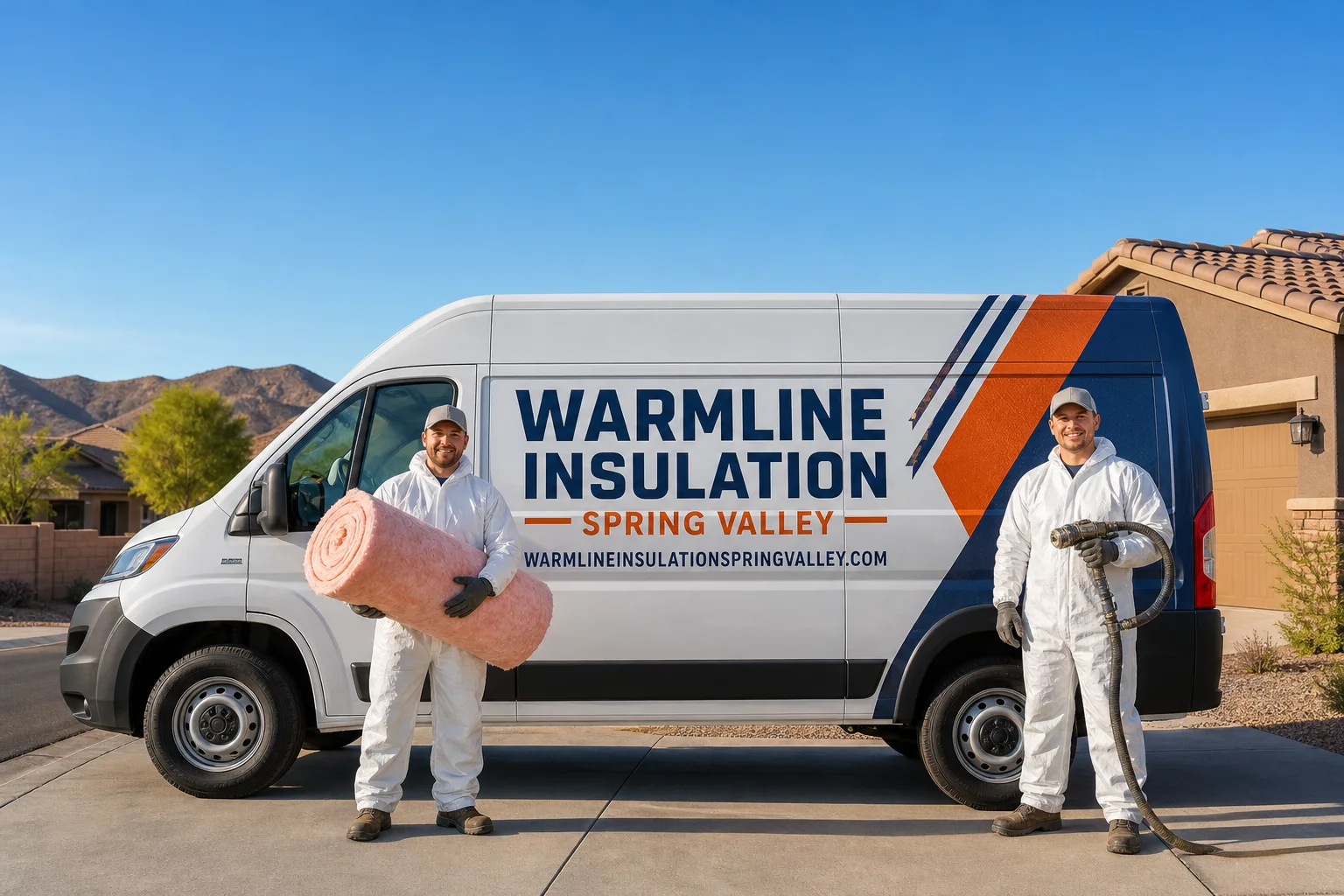
Fast, Reliable Crawl Space Encapsulation & Vapor Barrier Across Whitney
If your home in Whitney has a musty smell in the hallway, cool air that never quite reaches the back bedrooms, or dust that settles faster than you can wipe it, the problem is often under the floor. We seal, line, and insulate those hidden cavities so the Mojave heat stays out and your HVAC stops fighting bare soil and sagging batts. Most Whitney jobs are completed in a single visit, and a live person answers the phone 24/7 at (844) 320-7741. Estimates are free and upfront pricing comes before anyone touches a joist.
Why Warmline Insulation Spring Valley Is Whitney’s Preferred Crawl Space Encapsulation & Vapor Barrier Company
We know Whitney’s housing because we work in it constantly. The ZIP code 89122 covers a stretch of east-valley subdivisions built fast between the 1980s and 2000s, and those homes share quirks that a generalist handyman misses: low-clearance access bays instead of deep underfloor cavities, stucco-over-frame walls, and concrete tile roofs with minimal ridge venting. That familiarity is why homeowners here call us back and hand our name to neighbors.
Our technicians have up to 15 years of experience reading exactly these assemblies, and every technician sent to your door is background-checked and uniformed. We’re licensed and insured, and pricing is quoted upfront so the number you hear on the phone is the number on the invoice.
Response time to Whitney is quick because it sits right in our regular east-valley rotation alongside Sunrise Manor and Winchester. When you call about a damp subfloor bay or a plenum that’s pulling attic dust, we can usually schedule a free estimate within a day or two and get the work done in one visit. That matters in a market where summer attic temperatures climb past 150°F and a failed vapor barrier gets worse every week.
Our Crawl Space Encapsulation & Vapor Barrier Services in Whitney
Whitney’s tract homes don’t have the deep basements you’d find in colder climates, so our scope here is built around what’s actually under these floors: low-clearance bays, raised subfloors, and garage-adjacent access cavities that need sealing and lining rather than a full Northern-style encapsulation. Here’s how each service plays out in Whitney.
Crawl Space Vapor Barrier in Whitney
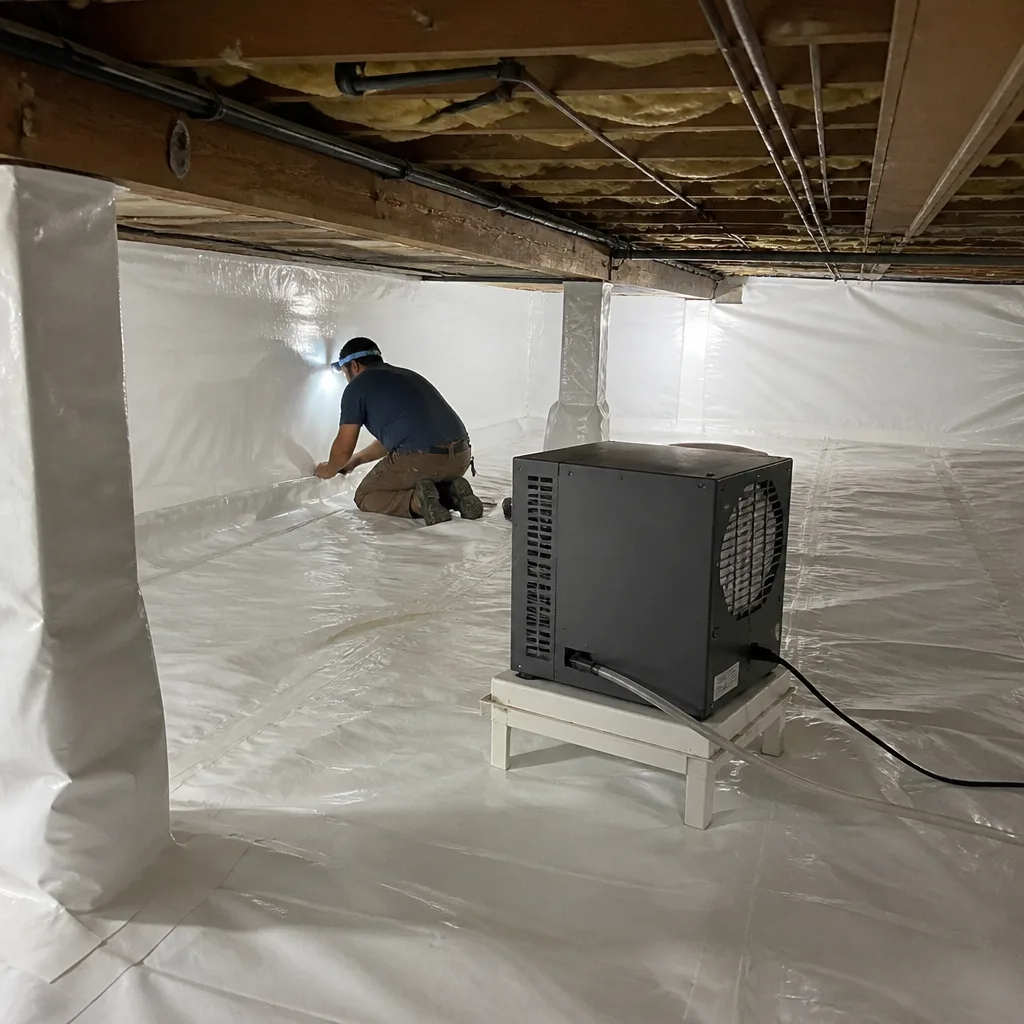
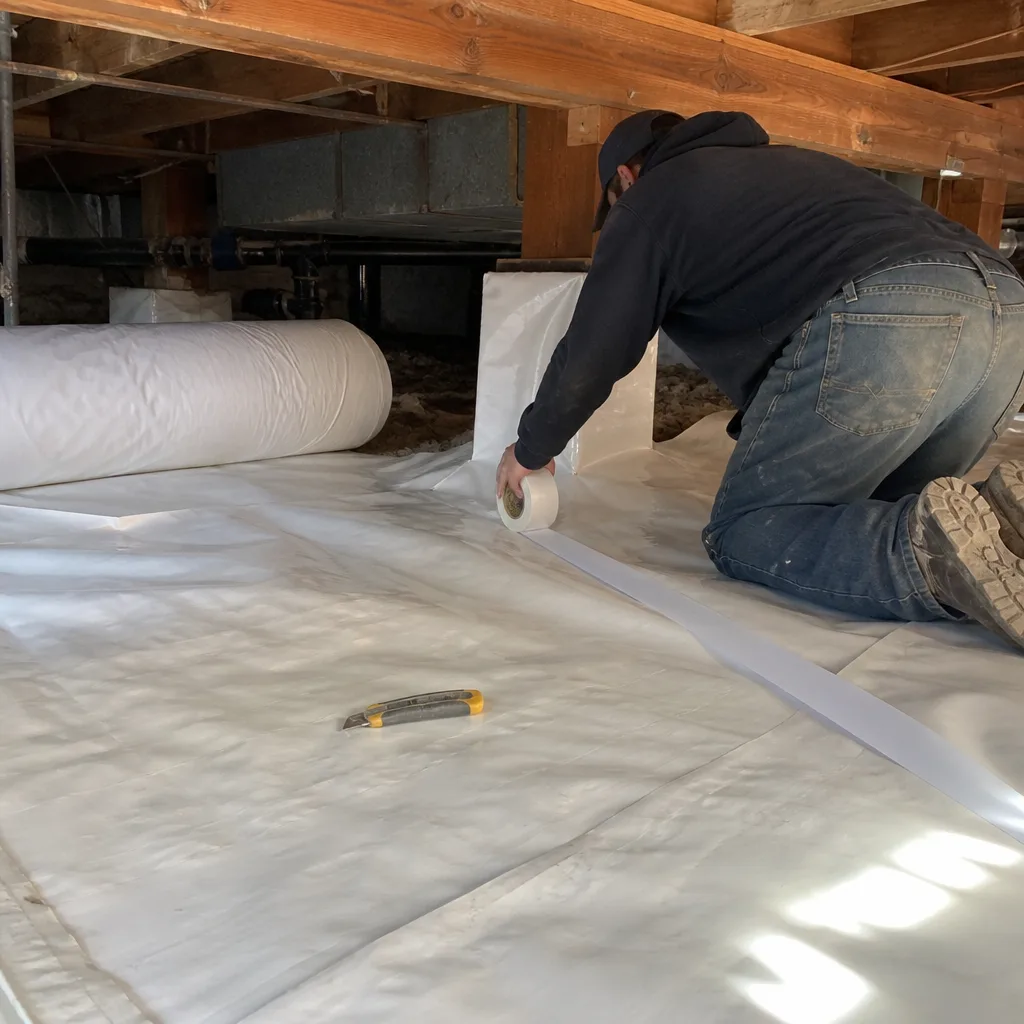
A sealed vapor retarder is the starting point for almost every Whitney job. We lay a heavy liner over bare soil, lap it up the stem walls, and seal the seams so ground moisture can’t wick up into the assembly. In a desert subdivision, the liner is doing double duty: blocking soil vapor and cutting the path that lets 150°F-plus attic air drive heat and dust down into the cavity.
Crawl Space Encapsulation in Whitney
Full encapsulation takes that liner and closes the loop, sealing vents and penetrations so the cavity becomes a controlled space instead of a chimney for attic heat. Before we line anything, we air-seal the boundary between the cavity and the unconditioned attic above. Skipping that step is the single most common reason a Whitney encapsulation fails within a season. When it’s done in the right order, the liner holds and the space stays dry. Every job is backed by our 90-Day Done Right Promise: if it’s not done right, we make it right.
Crawl Space Insulation in Whitney
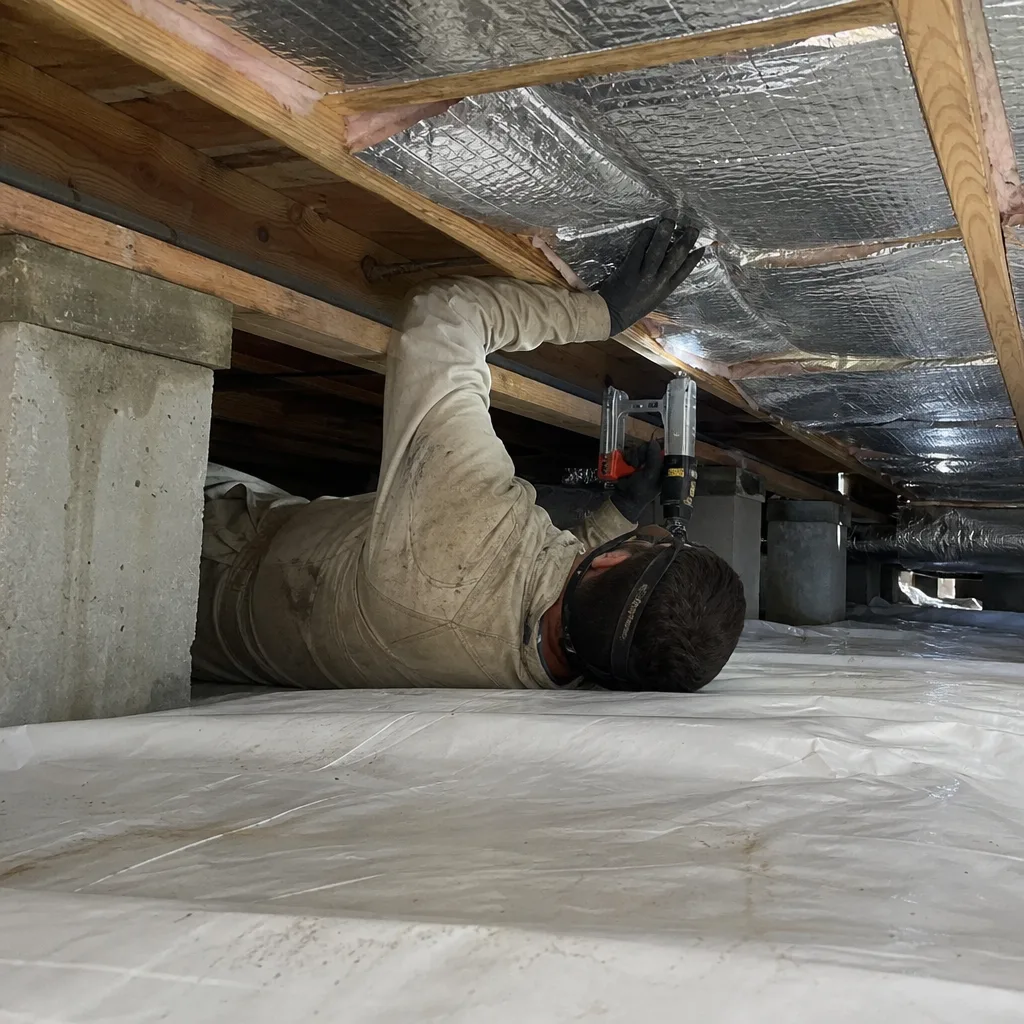
Original builder-grade fiberglass batts in these low-clearance cavities sag over time and rarely get re-supported once a home changes hands. We pull the failed material, re-support or replace it, and use proven products from CertainTeed and Rockwool to restore R-value where it counts. That’s what keeps the floor above from turning into a heat sink in July and August.
Crawl Space Moisture Control in Whitney
Moisture control in Whitney is mostly about cutting off the sources, not adding a dehumidifier and hoping. We address bare-soil vapor, UV-degraded duct wrap, and weatherstripping at the attic-to-cavity boundary that lets hot, dusty air bleed in. Once those paths are closed, the space stabilizes and stays that way through the summer.
Trusted Brands We Service in Whitney
We work with the insulation industry’s benchmark materials, including CertainTeed and Rockwool, plus Icynene and Demilec for the foam details that seal tricky penetrations around plumbing and duct boots. These are brands with published performance data, which matters when you’re sealing a cavity against Mojave heat and UV. We don’t stock parts or materials locally; instead, we spec the right product for your Whitney home and bring what the job needs on the scheduled visit. That keeps turnaround fast and avoids the “we’ll come back when it’s in” routine. What you get is a properly lined, properly supported assembly using materials that hold up in this climate.
Common Crawl Space Encapsulation & Vapor Barrier Problems We See in Whitney Homes
- Bare-soil bays with no vapor retarder. Many Whitney tract homes have never had a liner at all. Summer attic heat pushes moisture and dust down into the cavity instead of letting it escape, which is why the smell shows up worse in August than in January.
- Sagging builder-grade batts in low-clearance cavities. Original fiberglass loses R-value as it sags and almost never gets re-supported after a resale. The floor above turns cold in spots and the HVAC works harder than it should.
- UV-degraded duct wrap and weatherstripping. Intense desert sun breaks down exposed wraps and seals faster here than in cooler markets. When that boundary fails, 150°F-plus attic air bleeds into the encapsulated space and defeats the liner.
- Liners laid without fixing venting first. A vapor barrier installed over an unresolved attic-to-crawl air path just traps Mojave heat and dust in the assembly. The fix is order of operations: air-seal and correct venting between the cavity and the attic above, then line and re-insulate.
Pricing for Crawl Space Encapsulation & Vapor Barrier in Whitney, NV
Honest ranges for Whitney’s market, based on typical low-clearance bays and raised subfloors in 1980s-to-2000s tract homes:
- Crawl Space Vapor Barrier: $1,200 – $2,800, depending on square footage and how much stem-wall lapping and seam sealing is involved.
- Full Crawl Space Encapsulation: $2,500 – $6,500, with the higher end covering vent sealing, air-sealing the attic boundary, and full liner detailing.
- Crawl Space Insulation (replace/support batts): $900 – $2,400.
- Crawl Space Moisture Control: $600 – $1,800, covering duct-wrap repair, weatherstripping, and source control.
What moves the number most is whether the attic-to-cavity boundary needs air-sealing and venting work first, and whether old batts need full removal. We quote free and upfront, and most jobs are done in a single visit. Ask about $50 Off Any Repair Over $250 and our permanent 5% Senior & Veteran discount.
We Also Serve Cities Near Whitney
Whitney sits in the middle of our east-valley service area, and we also handle homes in Sunrise Manor, Winchester, Paradise, and Las Vegas. If you’re comparing scope between neighborhoods, our team can walk you through how crawl space encapsulation in Whitney differs from work in older, deeper underfloor cavities elsewhere in the valley. Call (844) 320-7741 to schedule.
Serving Whitney, NV – Our Local Coverage Area
We serve Whitney and nearby communities. Use the map below to see the area we cover. If you’re nearby, we can almost certainly help.
FAQs – Crawl Space Encapsulation & Vapor Barrier in Whitney
Usually not in the Northern-style sense. Most Whitney homes were built on slabs with no true vented crawl space, so what needs work is a low-clearance plenum, raised subfloor, or garage-adjacent access bay. We seal and line those cavities rather than a full basement crawl. If you’re not sure what your home has, a free estimate will tell you straight. Call (844) 320-7741 to set one up.
Because the liner can’t hold against a heat path that’s still open. In these subdivisions, attic temperatures routinely exceed 150°F, and the attic-to-cavity boundary acts like a chimney pulling hot, dusty air down into the space. Lining the ground without air-sealing and correcting venting first just traps that heat and dust in the assembly. We fix the order of operations before the liner goes down. Call (844) 320-7741 for an exact quote, free of charge.
It changes how the whole assembly vents. Low-pitch concrete tile roofs with minimal ridge venting hold heat longer, and stucco-over-frame walls are far less forgiving of trapped moisture than older, more breathable construction. That’s why we air-seal and correct venting at the attic boundary as part of moisture control, not as an optional add-on. Call (844) 320-7741 to talk through your specific roof and attic setup.
Yes, indirectly. In the earlier Whitney phases, single-pane and early dual-pane windows pull air across the floor, which drags moisture and dust up from an unlined cavity and makes comfort worse. Sealing the cavity cuts that path. Windows are a separate upgrade, but if you’re already tearing into the subfloor assembly, it’s worth a conversation about what’s driving your comfort problems. Estimates are free at (844) 320-7741.
Sometimes a sealed liner is enough, and sometimes it isn’t. If the cavity has an open air path to a 150°F-plus attic, a barrier by itself will underperform, and full encapsulation with vent sealing and air-sealing is the better call. We’ll tell you which one your Whitney home actually needs after a free inspection. Call (844) 320-7741 to book it.
Written by the team at Warmline Insulation Co.